
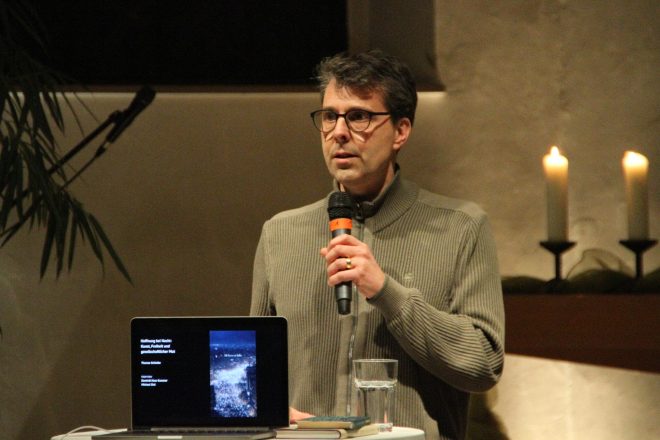
In the Protestant Church in Oberrahmede, architect and lighting expert Thomas Schielke spoke about art as a form of social resistance – from protest projections in Los Angeles to AI images from Iran. In the discussion that followed, it became clear what these global signs have to do with Lüdenscheid.
It is dark in the Protestant Church in Oberrahmede on this Friday evening. Not only outside. Dr Thomas Schielke begins his lecture by stating that night is not just a time of day, but a state of being. A metaphor for a time when news weighs heavier than hope, when freedom seems vulnerable and the question arises as to what remains when certainties fade. Schielke does not talk about bright lights that dazzle. He talks about the light that remains. About hope.
The church is well filled. People sit close together, as if this proximity were already a quiet response to the theme of the evening. Schielke, an architect and lighting expert, has been working at the interface of design, art and social change for years. His lecture is not a linear argument, but a journey through images, interventions, projections, quotations, books and political events. A slide show that is more essay than presentation, more cultural criticism than specialist lecture.
It begins with Picasso’s ‘Guernica’. In the midst of the chaos of this world view stands a child with a torch. No heroic light, no salvation, just a small flame. ‘Perhaps that is hope at night,’ says Schielke. It is a thought that carries the evening: hope does not end suffering, but it contradicts darkness.
From there, it leads to Caravaggio’s ‘The Calling of Saint Matthew,’ to that narrow beam of light that transforms an everyday space into a moment of decision. Here, art becomes a moral resonance chamber. Not as decoration, but as an imposition: would we be willing to stand up and step into the light?
Light as the opposite of darkness
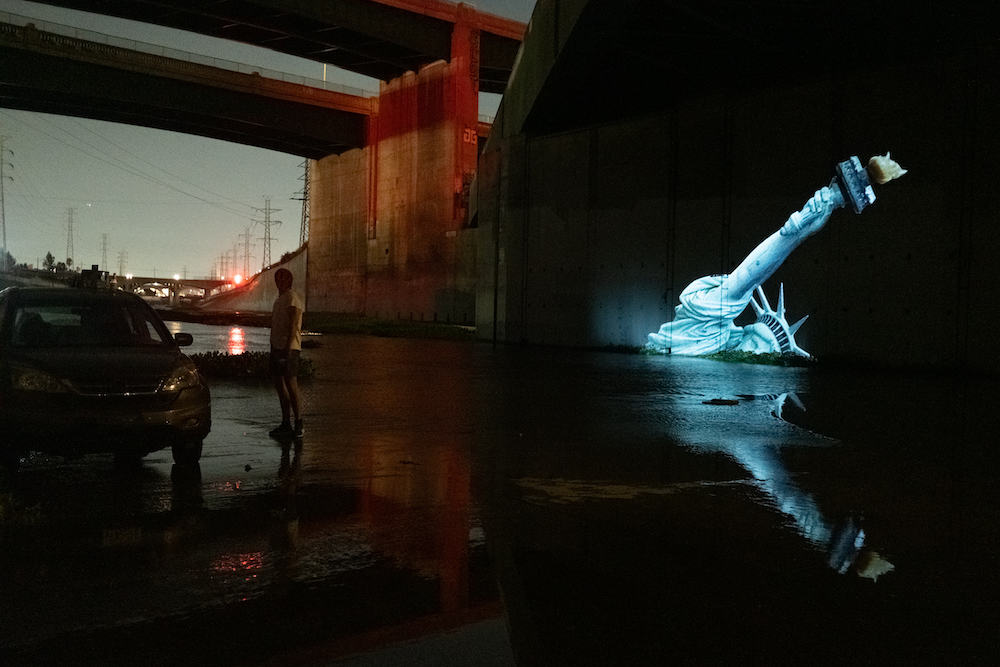
What follows is an international journey through places where light becomes a political gesture. Under motorway bridges in Los Angeles, the artist collective VJayBomb projects the Statue of Liberty onto a bridge pier. It slowly sinks into the water, the torch remains lit. Not a monument, not an iconic place, but a ‘non-place’ made of concrete. It is precisely there that the symbol of freedom appears – vulnerable, close, human. The projection lasts only minutes, but it permanently changes the way we see this place.
In Madrid, citizens protest as holograms in front of parliament because real gatherings are prohibited. In Chile, the word ‘humanity’ is projected onto the façade of a high-rise building – and demonstratively erased by security forces, which only serves to spread the message even further. In Bochum, drones take to the skies and write political messages in the sky. Art, as Schielke shows, is not decoration here, but action. Not illustration, but intervention.
Time and again, it is about courage. Not heroic courage, but the quiet courage of arriving, of looking, of setting off, of standing firm, of telling new stories. Quotes from Luisa Neubauer, Maja Göpel, Daniel Schreiber, Hannah Arendt and Karl Popper are interwoven with the images. The lecture is dense, almost exuberant, but never arbitrary. It revolves around the question of where society draws the strength not to remain silent.
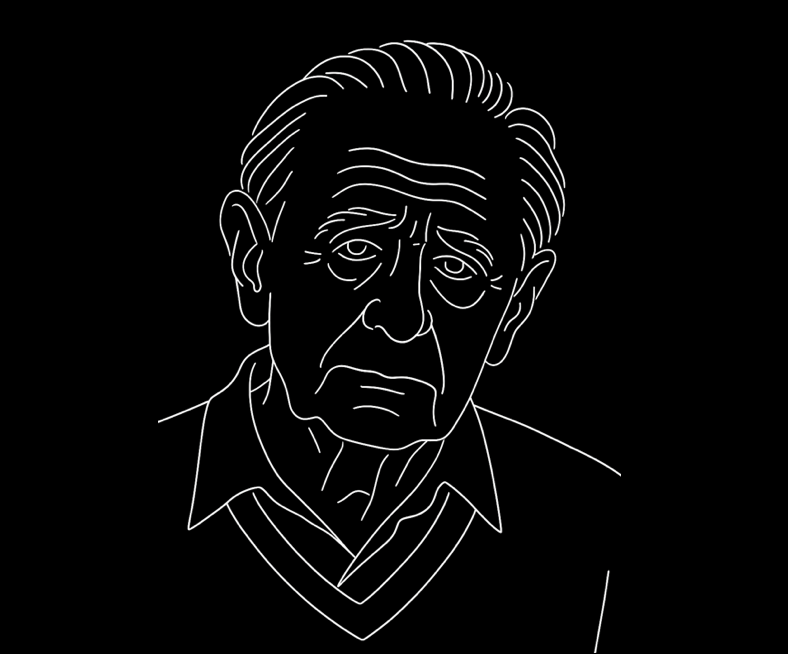
If we are not prepared to defend a tolerant social order against the attacks of intolerance, then the tolerant will be destroyed, and tolerance with them.
Karl Popper, philosopher
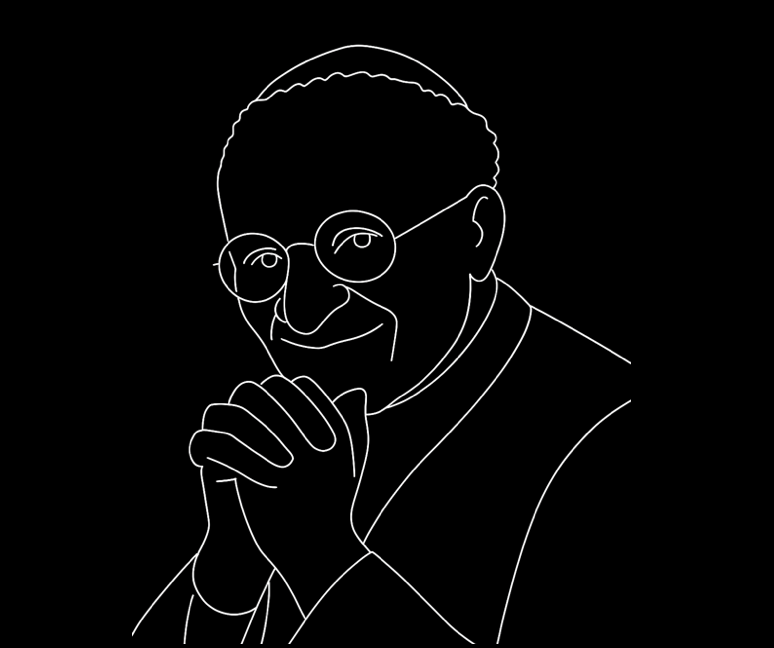
If you are neutral in situations of injustice, you have chosen the side of the oppressor. If an elephant puts its foot on a mouse’s tail and you say you are neutral, the mouse will not appreciate your neutrality.
Desmond Tutu, Archbishop
It becomes particularly poignant when Schielke discusses current AI-generated videos from Iran. People with lights in their hands walking through the streets at night. No leader, no stage, just many individuals walking side by side. The light does not come from above, but from their hands. In times of internet blackouts, the smartphone becomes not a means of communication, but a source of light. Hope without pathos, but with force.
Here, the evening shifts from aesthetic contemplation to political urgency. Schielke talks about disinformation, the power of social algorithms, authoritarian regimes and the need not to counter intolerance with false tolerance. Art becomes a seismograph of social tensions. And then he asks the crucial question: What does all this mean for Lüdenscheid?
From global panorama to local responsibility
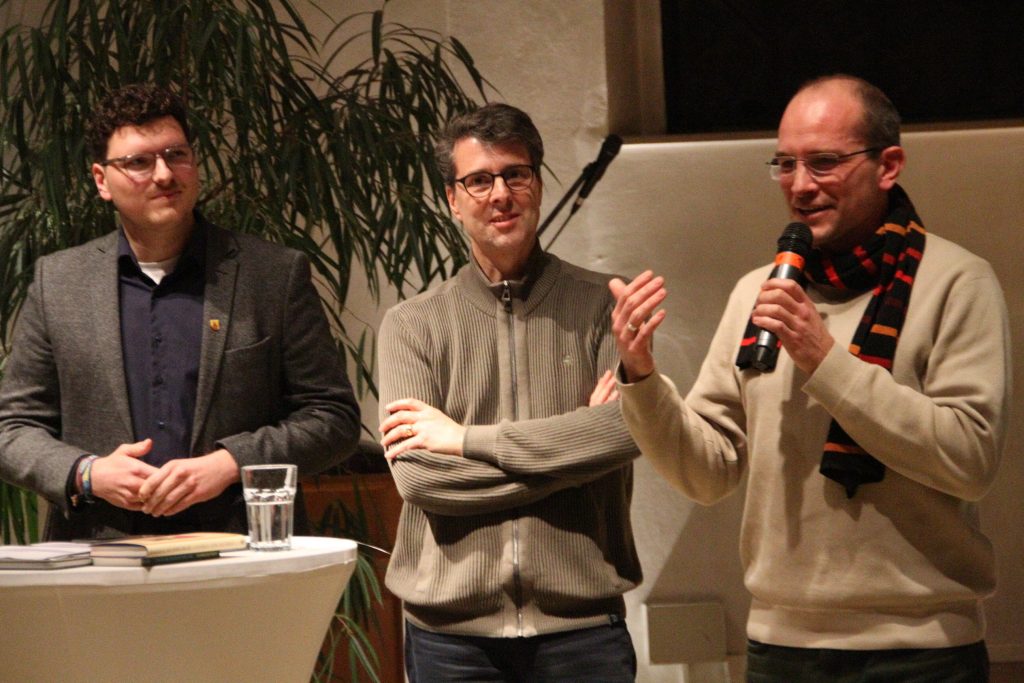
In the second part of the evening, Schielke talks to Dominik Hass-Sommer, chairman of the cultural committee in Lüdenscheid, and Pastor Michael Siol. After the global perspective, the focus shifts to the local level. But the conversation does not feel like a break, but rather a continuation on a different level.
Hass-Sommer describes how much our perception of the world changes when we look at it through real encounters rather than social networks. Election campaigns, club work, light routes – everywhere he experiences optimism, commitment and community. ‘The reality is often very different,’ he says. Algorithms distort, encounters ground us.
Siol picks up on this idea. Hope arises where people treat each other kindly. At the same time, he warns that values need guidance that goes beyond majorities. ‘Many people with torches can also be a torchlight march,’ he says, pointing to the need for clear ethical guidelines.
What emerges here is not a political debate, but rather a reflection on how the church, politics and culture can work together to create spaces for resonance. Hass-Sommer talks about alliances against intolerance, democratic compromises and culture as a place of encounter. Siol recounts stories of community festivals, picnics at the fire station and children’s musicals – of hundreds of volunteers who create moments of light in everyday life.
On this evening, Lüdenscheid does not appear as a provincial town, but as a laboratory. As a place where small decisions determine whether the light will be passed on. The church proves to be not a backdrop, but an equal sounding board. The sacred place reinforces the effect of the images and thoughts without appropriating them. Here, there is no preaching, only reflection. No moralising, only questioning. In the end, there is no dramatic conclusion, but a quiet thought: hope at night is possible because it is carried. Not by individuals, but by many.
When the visitors leave the church, it is still dark outside. But the light from the windows accompanies them for a while. Perhaps that is the real point of this evening: that art, church and society are not separate spheres, but together guard those little flames that contradict the darkness.
Videos of projects shown by various artists and activists are available at these links:
- Statue of Liberty, Los Angeles. VJayBomb, 2025
- Hologram protest, Madrid. DDB Spain, 2015
- Hambre, Humanidad y Solidaridad, Santiago de Chile. Delight Lab, 2020
- ICE Machine, USA. VJayBomb, 2026
- Adenauer SRP+, Berlin. Zentrum für politische Schönheit, 2025
- Tesla Gigafactory, Grünheide. Led by Donkeys und Zentrum für politische Schönheit, 2025
- Demonstration gegen Rechtsextremismus, Bochum. Kein Bock auf Nazis, 2025
- AI Summit, Paris. Joanie Lemercier, 2025
- All eyes on Iran. Elnaz Mansouri, 2026. KI generiert
- Teheran, Iran. sarahrmni, 2026
- We’ve waited long enough, Iran. DJ Sherry, 2026. KI generiert
- Demonstration, Iran. Cabracabaret, 2026. KI generiert
- We’re being killed, Iran. tinamor_, 2026. KI generiert
- All Eyes on Iran. Amir Madady. Amirxkabir, 2026. KI generiert
- No Kings, Davos. Strike WEF, 2026
Report in the local newspaper on 12 February 2026 by Thomas Krumm:
Leuchtender Protest: Lady Liberty versinkt an einer Kreuzung in Los Angeles